| 1957 saw the birth of the modern
format: songs (one from each competing nation) followed by voting (each
nation's jury communicating its votes on air to the presenter via
telephone). However, certain finer details were still being worked out:
perhaps most obviously, Italy demonstrated the potential sense in
having a maximum song duration by entering a typically Italian epic
with lashings of classical guitar and a running time in excess of five
minutes. In fairness the UK (marking their debut in the competition)
balanced this out somewhat by not even clocking up two minutes for
their performance (the shortest ever entry): an operatically delivered
piece of delightful light-programming that suddenly gains the faintest
whiff of cha-cha. Meanwhile, the Danish duo, dressed as a docklands
assignation and surrounded by smoke, spent half a minute of their somewhat cinematic
performance ramming each others tongues down their respective throats
(it is a shame they spent more time on costume, effects and snogging
than they did on what was a rather dreary song). The open length did
allow for a certain depth of creativity lacking in the modern three
minute format, though '90s Eurovisions would've lasted several weeks
had the time-limit not been introduced. Germany's entry in 1957 was the delicious Margot Hielscher conducting what can only be described as the musical equivalent of phone-sex. Meanwhile, the actual winner on the night, the Netherlands' regular chanteuse Corry Brokken, performed, before a Saul Bass style swirl backdrop, a fairly standard Vera Lynn-ish chanson with obligatory music-hall gesturing, before the piece kicked off at 3'30" with a jaunty, punchy fiddle solo courtesy of a charming diminutive bespectacled gentleman. In short, 1957 was an excellent year of Eurovision, setting early benchmarks on songs, performance and design. For each year's songs we apply our points in the 12-10-8 style of the modern contest, irrespective of how the voting functioned at the time. In brackets is the position the song came on the night:
|
 Our winner: the UK's Patricia Bredin.  Those steamy Danes.  The delicious Margot Hielscher. 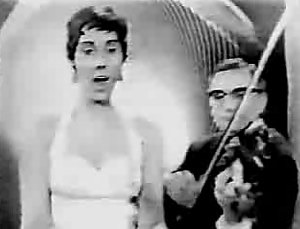 Rose for the lady? Europe's winner. 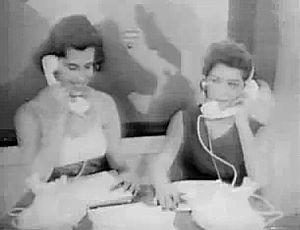 Hello. This is AView calling. |


