| The Netherlands became the first
country to win Eurovision twice, with lyricist Willy van Hemert
becoming the first human being to score two wins. 1959 also saw the
UK's first of many second-place finishes: the legendary "Sing Little
Birdie", resplendent in whistles and wide-eyed jaunt. The set this year
was a wonderful revolving affair decorated in nationally appropriate
landcapes. The Danish entry, sung by the impish Birthe Wilke (something like a cross between Björk and Gracie Fields, and one half of the snog in the fog in 1957) was our stand-out number of the night: a bouncy comedic little thing with hints of "Who's Afraid of the Big Bad Wolf", performed with knee-bends and chicken-wing gestures. Particularly enticing was the little stroll she took during the instrumental, punctuated at every turn by deft flicks of the train of her dress. Italy stuck with Domenico Modugno, but as good as his song was, it was no "Volare". Germany gave us the first identical twins of Eurovision in the form of Alice & Ellen Kessler with their swinging and highly choreographed Carry On routine. Meanwhile, the Netherlands came up with the Margot Hielscher-esqe Teddy Scholten for a particularly flirty and nose-wrinkling cute routine and a song which on a weaker night we could easily have selected as our winner. Europe certainly enjoyed it, and awarded it first place. For each year's songs we apply our points in the 12-10-8 style of the modern contest, irrespective of how the voting functioned at the time. In brackets is the position the song came on the night:
Europe voted Switzerland 4th. Let's take a look then at how our voting compares with Europe's so far. For the sake of comparison, the top ten places in the final official standings for each contest are assigned 12-10-8 style points. In the case of a tie for place, the nation that received the highest individual score from a single jury takes the place, and if no resolution is forthcoming from this method then the benefit goes to that nation which our own jury scored the higher. Any ties in the final tally are broken in a similar fashion, with the benefit going to the nation with the highest annual placing. The points given in brackets on our side factor in the scores of the 1956 contest (data which is unavailable for Europe as the official voting was held in camera).
|
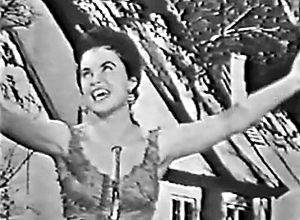 Our winner, Birthe Wilke. 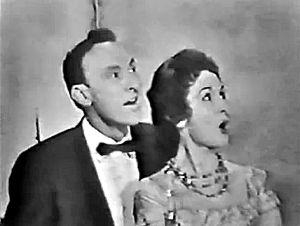 Mao's favourites: Johnson & Carr. 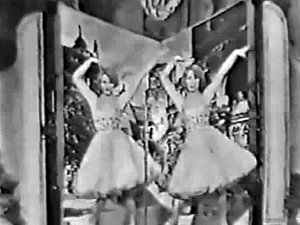 Doublevision: the Kesslers on the revolving set. 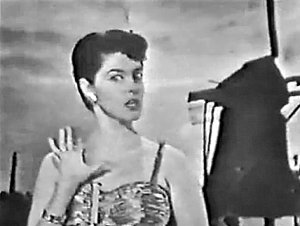 Europe's winner: Teddy Scholten.
|
||||||||||||||||||||||||||||||||||||||||||||||||||||||||||||||||||||||||||||||||||||||||||||||||||||


