| 56 | 57 | 58 | 59 | ||||||
| 60 | 61 | 62 | 63 | 64 | 65 | 66 | 67 | 68 | 69 |
| 70 | 71 | 72 | 73 | 74 | 75 | 76 | 77 | 78 | 79 |
| 80 | 81 | 82 | 83 | 84 | 85 | 86 | 87 | 88 | 89 |
| 90 | 91 | 92 | 93 | 94 | 95 | 96 | 97 | 98 | 99 |
| 00 | 01 | 02 | 03 | 04 | 05 | 06 | 07 | 08 | 09 |
| 10 | 11 | 12 |
Luxembourg definitely punch above
their weight in Eurovision, taking five wins before their retirement in
1994 (triggered by their "relegation" in 1993). Their secret has been
their small size: they've felt no parochial necessity to field
home-grown talent, and so have been able to have their pick of the
whole of Europe (this chart includes performers from France, Greece and
Spain). Early Luxembourg entries were a bit of a mixed bag, but in the
1970s, inspired by earlier efforts by Monaco, they hit on a particular
form of song that would prove very
successful: the power ballad. Entries such as those that won in 1972
and 1973 set the template that would dominate the contest for decades
to come. Luxembourg experimented with disco in the late '70s (much to
our delight and Europe's disinterest), before returning to their
winning model in the 1980s.
Here, then, are the top five votings of the AView jury:
Here, then, are the top five votings of the AView jury:
|
1pt |
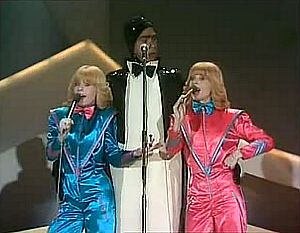
1980 | AV:
6th Eur: 9th |
| Sophie & Magaly - "Papa Pingouin" | |||
|
Following the triumph (in our mind) of "Dschinghis Khan" in 1979, this year's Ralph Siegel entry (under the flag of Luxembourg) was a Gainsbourgian piece of cartoonish pop called "Papa Pingouin". Penguin costumes were involved. The song mainly consisted of the lyrics: "Le papa pingouin / le papa pingouin / Le papa, le papa, le papa pingouin" being sung by a pair of twins in coordinated outfits.
|
|||
|
2pts |
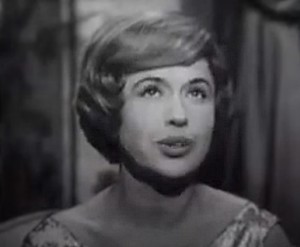
1956 | AV:
4th Eur: undisclosed |
| Michèle Arnaud - "Ne crois pas" | |||
|
A galloping chase of chanson. Hold onto your berets!
|
|||

|
3pts |
1965 | AV:
6th Eur: 1st |
| France Gall - "Poupée de cire, poupée de son" | |||
|
An undoubted Eurovision classic, the Gainsbourg-penned "Poupée de cire, poupée de son" (relentless and pounding fun draped with sweeping strings) won the contest from the mouth of France Gall. Yet it is our view that her performance on the night was rather weak: the arrangement was quite limp and she was nowhere near hitting that first note. Going into 1965 knowing this song, we thoroughly expected to be giving it our 12pts at the end of the night. That in the end we put it sixth goes some way to demonstrating quite how strong the 1965 competition was.
|
|||
|
4pts |
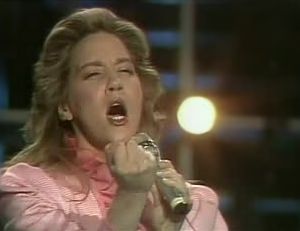
1983 | AV:
unplaced Eur: 1st |
| Corinne Hermès - "Si la vie est cadeau" | |||
|
A rather frosty affair: another soaring power-ballad of the kind that would dominate and almost destroy the contest. Thanks to its frostiness, its minor sections, and a slightly unconventional climax, it's not nearly as awful as some of its descendants; in fact it's by no means a bad song. But when judged alongside the previous two Luxembourg winners (1972 and 1973) one can already discern the rot setting in. There's something far too slick and plastic lurking at the heart of this song: the definite whiff of a 'winning formula' being worked out.
|
|||
|
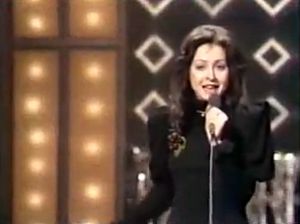
5pts |
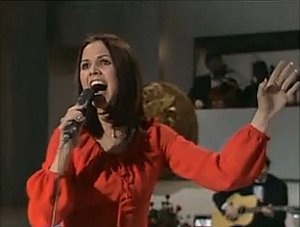
1973 | AV:
7th Eur: 1st |
| Anne-Marie David - "Tu te reconnaîtras" | |||
|
Luxembourg got the win for the second year running. As with the previous two winners, it was a rousing power-ballad to which anyone with a lighter might meaninglessly participate. Again, it was by no means a bad song and it is easy to see how it won.
|
|||
|
6pts |
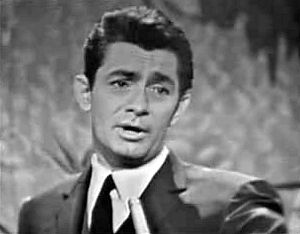
1972 | AV:
7th Eur: 1st |
| Vicky Leandros - "Après toi" | |||
|
A power ballad with definite
overtones of "Don't Cry for Me Argentina" and "Bridge Over Troubled
Waters" (though thankfully superior to both) and a worryingly familiar
sort of chorus that tends to garner votes. It was sung by Vicky
Leandros who'd represented Luxembourg in 1967 with "L'amour est bleu".
The lyricist Yves Dessca also wrote last year's winner and became the
first winner under two different flags.
|
|||
|
7pts |
1961 | AV:
1st Eur: 1st |
| Jean-Claude Pascal - "Nous les amoureux" | |||
|
1961 was the first year where
our jury concurred with the official result. Even Europe could
appreciate Jean-Claude Pascal's sensuous slab of skittish chanson.
|
|||

|
8pts |
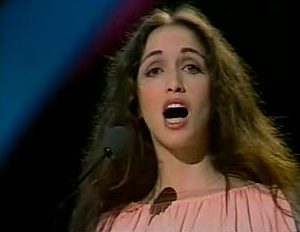
1978 | AV:
1st Eur: 7th |
| Baccara - "Parlez-vous français?" | |||
|
The Spanish duo Baccara, best
known for "Yes, Sir, I can Boogie" represented Luxembourg in 1978 with
a song that isn't anywhere near as good as that. Still, few things are
quite as good as "Yes, Sir, I can Boogie", so this was to be expected.
It was at least an admirable attempt and captured a good deal of the
spirit and style of their big hit. Some excellent 'chance-meeting'
spoken exchanges and a dance routine in the instrumental pepped things
up nicely, and the song provided some much needed fun on what was on
the whole a pretty dull night.
|
|||
|
10pts |
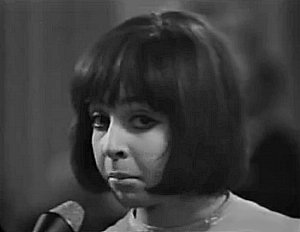
1977 | AV:
4th Eur: 16th |
| Anne-Marie B - "Frère Jacques" | |||
|
1977 was the year that
Eurovision embraced disco. Luxembourg's entry, owing a lot to the likes
of Serge Gainsbourg and Pierre Henry, is a repetitive, seductive number
that mainly consists of the words "Frère Jacques" being sung in
a handful of different keys to a delicious disco groove overlaid with
tubular bells and cross-dressed urchin backing vocals.
|
|||
|
12pts |
1967 | AV:
2nd Eur: 4th |
| Vicky Leandros - "L'amour est bleu" | |||
|
Some readers may be shocked to
notice that France Gall's "Poupée de cire, poupée de son"
has failed to make this list (we place it sixth, but Luxembourg don't
have enough great songs to make a top ten worthwhile). The simple truth
is that, as good as that song is, her performance on the night was
off-key and underwhelmingly wooden. But enough about the also-rans;
what about our winner? 1967 was another year in which, as with 1958, a
song which didn't win would go on to become a bigger hit worldwide than
the song which did. The song which didn't win in this case was the
hypnotic, "Greensleeves"-like "L'amour est bleu". Face it: it's
beautiful.
|
|||