| 56 | 57 | 58 | 59 | ||||||
| 60 | 61 | 62 | 63 | 64 | 65 | 66 | 67 | 68 | 69 |
| 70 | 71 | 72 | 73 | 74 | 75 | 76 | 77 | 78 | 79 |
| 80 | 81 | 82 | 83 | 84 | 85 | 86 | 87 | 88 | 89 |
| 90 | 91 | 92 | 93 | 94 | 95 | 96 | 97 | 98 | 99 |
| 00 | 01 | 02 | 03 | 04 | 05 | 06 | 07 | 08 | 09 |
| 10 | 11 | 12 | 13 | 14 | 15 | 16 | 17 | 18 | 19 |
| 20 | 21 |
For us, the Dutch were at the height
of their powers in the 1960s, when they were largely responsible for
the introduction and propagation of danceable Latin rhythms helmed by
feisty exotic women. By the late '60s, though, imitation (or
innovation) of a previous winner became the house formula: "L'amour est
bleu" begets "De Troubadour"; ABBA lead to Teach-In. The Netherlands
became a Eurovision weathervane of sorts: a regularly average sort of
presence. They still keep plugging away, and occasionally something
interesting happens. But for eight consecutive years, the Netherlands were absent from the contest proper, unable to break through from the semi-finals. Taking part in Eurovision was a losing game, but not anymore: the Dutch claimed their fifth victory in 2019.
Here, then, are the votings of the AView jury:
|
1pt |
1992 |
AV:
2nd Eur: 9th |
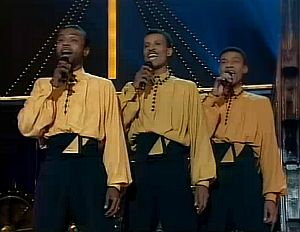
| Humphrey Campbell - "Wijs me de weg" | |||
|
The 1992 Dutch entry is
particularly Dutch and very of its time: a trio of black men in
buttoned up shirts and high-waisted trousers dancing in unison to a
modern soul-disco number. All is fairly as one would expect, with the
possible exception of the accordion solo.
|
|||

|
2pts |
1997 | AV:
1st Eur: =22nd |
| Mrs. Einstein - "Niemand heeft nog tijd" | |||
|
The name of this act is Mrs.
Einstein. Sounds like a Paul McCartney song, doesn't it? "Mrs.
Einstein, oh Mrs. Einstein, your husband is a clever man / a
husband is a relative but you are relatively sad." or some such drivel.
And indeed, this song sounds like a McCartney work, but not one of his
oompah vignettes. No, this is "Live & Let Die" (and in equal
measure "MacArthur's Park"). It's being performed by five Loose Women
(women being definitely the right word; these are not girls by any
stretch of the term) who sway about the stage singing something about
time. The orchestra squeals around them excitedly, glad of something
exciting to do, and the result is "Live & Let Die" with a
harmonizing female vocal group sashaying in the back of the speedboat
(which has got to be an improvement by anybody's measure).
|
|||
|
3pts |
1964 | AV:
2nd Eur: =10th |
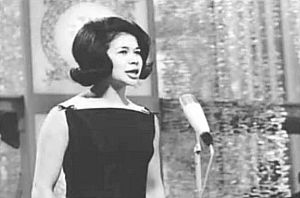
| Anneke Grönloh - "Jij bent mijn leven" | |||
|
An energetic piece of early
'60s fun, with luxurious string stabs and a sexy swaying verse. It has
a cheeky feel and a rising bass, and stands out from most of the rest
of the crowd in what was a dull year. Thankfully, its approach would
find imitators in 1965.
|
|||
|
4pts |
1957 | AV:
3rd Eur: 1st |
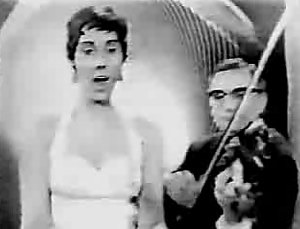
| Corry Brokken - "Net als toen" | |||
|
The Netherlands' regular
chanteuse, Corry Brokken, performed, before a Saul Bass style swirl
backdrop, a fairly standard Vera Lynn-ish chanson with obligatory
music-hall gesturing, before the piece kicked off at 3'30" with a
jaunty, punchy fiddle solo courtesy of a charming diminutive
bespectacled gentleman.
|
|||
|
5pts |
1967 | AV:
4th Eur: =14th |
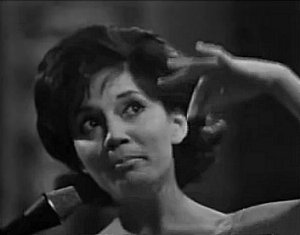
| Therese Steinmetz - "Ring-dinge-ding" | |||
|
In 1967, the Netherlands
grasped the early '60s Scandinavian innovation of onomatopoeic nonsense
sing-along choruses and gave us the inevitable and definitive
"Ring-dinge-ding".
|
|||
|
6pts |
1975 | AV:
2nd Eur: 1st |
| Teach-In - "Ding-A-Dong" | |||
|
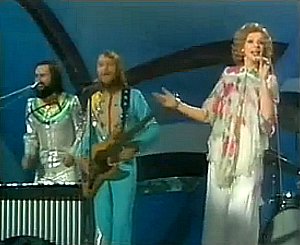
Continuing the tight glam-pop
theme established by ABBA the previous year, and simultaneously echoing
the sentiments of the classic Eurovision choruses of old, in 1975 the
Netherlands gave us the enjoyable "Ding-A-Dong" (or more accurately
"Ding Dinge Dong") sung by a confused Beverley Sister in her nighty
(under the mistaken impression that she's Goldfrapp) and owing more
than a little to the Grandstand theme-tune. Having seen the Dutch
national finals we believe that Teach-In were the wrong choice for this
song and that the mercurial 'Debbie' deserved to take the song to
Sweden. Her dark-brown performance, like some menacing Dietrich, found
umph, funk and passion where Teach-In could only muster jangly pop.
When Debbie shouts "Bim-bam-bom" she really means it.
|
|||

|
7pts |
1969 | AV:
1st Eur: =1st |
| Lenny Kuhr - "De troubadour" | |||
|
Possibly influenced by the
success of Luxembourg's Renaissance-inflected "L'amour est bleu" a
couple of years earlier, in 1969 the Netherlands brought out Lenny Kuhr
and her guitar for their winner: a decidedly Moorish and undoubtedly
charming chanson with hints of Greensleeves and the Rhineland. It came
out as our favourite on what was a rather crowded night.
|
|||

|
8pts |
1965 | AV:
5th Eur: 18th |
| Conny Vandenbos - "'t Is genoeg" | |||
|
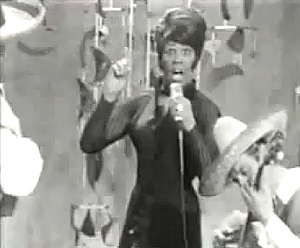
Conny Vandenbos's severe and
angular performance is stunning. From the first bongo-driven moments it
is clear that something has changed in Eurovision: the frenetic upbeat
innovations of the Germans and the Dutch in 1964 have blossomed into a
Latin revolution of sorts.
|
|||
|
10pts |
1966 | AV:
unplaced Eur: 15th |
| Milly Scott - "Fernando en Filippo" | |||
|
Eurovision's first black singer
(and second black performer) Milly Scott continues the theme the Dutch
had been developing in the '60s. The Dutch Shirley Bassey began her
song backstage before appearing to greet her gaucho accompanists in a
joyful (if slightly cheesy) piece of light Caribbean fun, then left the
stage again at the end (only to spoil it by returning for her
applause). We didn't give this any points when we originally judged
1966, and that was very very wrong of us. We redress this error now.
|
|||
|
12pts |
1962 | AV:
5th Eur: =13th |
| De Spelbrekers - "Katinka" | |||
|
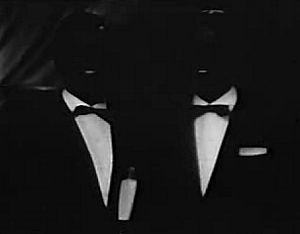
The pleasantly tinkly-sounding
"Katinka" was delivered with wide eyes and keen grins that broke the
cameras and made the delivering duo look like minstrels. But it isn't
just the unintended comedy that has earnt this song top billing; it is
a genuinely cheery and entertaining performance, cheekily delivered. It
was also one of four songs that year to receive the first "nul points"
in Eurovision history (all four of them perhaps unsurprisingly
featuring in our own top ten).
|
|||