| 56 | 57 | 58 | 59 | ||||||
| 60 | 61 | 62 | 63 | 64 | 65 | 66 | 67 | 68 | 69 |
| 70 | 71 | 72 | 73 | 74 | 75 | 76 | 77 | 78 | 79 |
| 80 | 81 | 82 | 83 | 84 | 85 | 86 | 87 | 88 | 89 |
| 90 | 91 | 92 | 93 | 94 | 95 | 96 | 97 | 98 | 99 |
| 00 | 01 | 02 | 03 | 04 | 05 | 06 | 07 | 08 | 09 |
| 10 | 11 | 12 | 13 | 14 | 15 | 16 | 17 | 18 | 19 |
| 20 | 21 |
There is much talk about how politics
ruins Eurovision, but the two have always been inextricably coiled
together to some extent. The very project, while superficially a
demonstration of broadcasting technology, is fundamentally a
continental showcase, hence the import shown to it by pariah states
such as Spain and Portugal. Corrupted or not, Spain's victory in 1968
was unquestionably a coup for the Francoists. And 1974's Portuguese
entry proved a coup for the Estado Novo. It will be remembered not for
sounding a bit like the theme to Blake's 7, but for being chosen as the
starting signal for the Carnation Revolution: 18 days after the contest
it was aired on Portuguese radio as the signal for rebel captains to
prepare for their coup. Eurovision, then, has a significance in
Portuguese history far beyond that of most entrants (alas Belle and the
Devotions failed to galvanize our own 'enemy within' to quite the same
extent). What reward for a nation so devoted to the contest? Is liberty
not enough? Portugal held the ignominy of being the longest serving
nation without a victory to their name, until their final, somewhat-out-of-nowhere success in 2017 — a success that was long overdue. Indeed, the AView jury gave them a
hat-trick of victories at the turn of the '80s. Europe, on the other
hand, missed the point: be that point tongue in cheek or stylistically
too advanced for Europe's slow-turning cogs to process. One might
suggest that the '70s run we've pinpointed was a different matter:
politics 'ruining' Eurovision again as Europe habitually marks down the
filthy fascists and dirty dictatorships. But then post-revolution 1975
didn't score any better (though in fairness, post-revolution Portuguese
entries weren't especially good until the end of the decade). The real
problem is that Europe just does not have much taste for punchy, moody,
angry strops, which is a shame, because Portugal are great at that sort
of thing, as we shall see below...
Here, then, are the votings of the AView jury:
|
1pt |
1996 |
AV:
1st Eur: 6th |
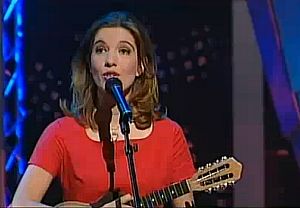
| Lúcia Moniz - "O meu coração não tem cor" | |||
| Armed
with a ukulele, the chipmunkish Lúcia Moniz clearly means
business. Her song has certain 1970s leanings, albeit filtered through
a lounge jazz cheesecloth. There's a nice ethnic groove, some memorable
chanting interjections from the backing vocalists, and a chorus where
everything except the ukuleles drops out. Martial wind adds just a
little extra folkiness where it's needed, to create what was our
winning song of the night, and to date the strongest performing
Portuguese entry in the contest. |
|||
|
2pts |
1984 | AV:
13th Eur: 11th |
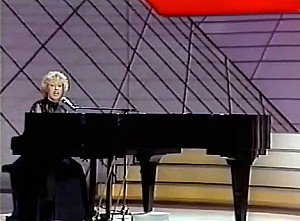
| Maria Guinot - "Silêncio e tanta gente" | |||
|
A hauntingly beautiful piano
ballad but perhaps more memorable for the amazing De Groot set
arrangement that served as its backdrop. Maria Guinot is a sort of
Portuguese Victoria Wood and the meter hangs in a way that could easily
carry the occasional amusing remark, but this is the soulful and more
serious number she's put into the set in the interest of variety. 1984
being a pretty strong year, it didn't make the top 10 for either our
jury or Europe as a whole, but it's better than the song that won it
for us twelve years later.
|
|||

|
3pts |
1971 | AV:
2nd Eur: 9th |
| Tonicha - "Menina do alto da serra" | |||
|
Portugal returned from a year
out with a woman in a camera-melting dress bearing arms of increasing
elevation and singing another rousing Mediterranean-inflected number
made truly special by a funked-up arrangement in the chorus. It's what
Portugal do best.
|
|||
|
4pts |
1976 | AV:
4th Eur: 12th |
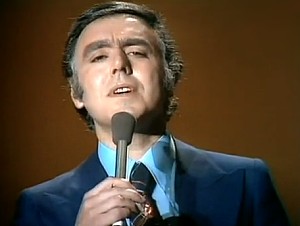
| Carlos do Carmo - "Uma flor de verde pinho" | |||
|
Portugal's entry is different:
a very grand introduction and some interesting on-stage instrumentation
makes it look like we're in for a chamber concert for a moment. In fact
we're in for some moving and very Belgian chanson that in an ideal
world would go on for twice as long as it does.
|
|||

|
5pts |
1982 | AV:
1st Eur: 13th |
| Doce - "Bem bom" | |||
|
From the moment Doce (that's
their name) appear, it is clear we are in for some sort of treat,
dressed as they are in spangly black and white musketeer outfits. They
then move forwards, one by one (there's four of them) in silence, and
one can't help but wonder if this will be some sort of Cage tribute:
3'00" maybe. But then a martial drum beats out a rhythm and the girls
start bobbing about. An Ottawan riff plays and they go "Hey". It's an
oddly sluggish performance, kind of like they're drunk. But the latex
space highwayman look carries them and it's a pretty good tune. It's
title is "Bem bom", which is actually not nonsense but the Portuguese
for "Very good" (something 1982 wasn't, though it was by no means very
bad).
|
|||
|
6pts |
1973 | AV:
3rd Eur: 10th |
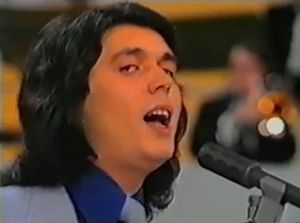
| Fernando Tordo - "Tourada" | |||
|
1973's Portugal had a Richard
Beckinsale lookalike doing a stomping, relentless, giddy march that put
us in mind of the theme-tune to the children's television series
"Chorlton and the Wheelies". The story of a bullfight, it is generally
understood to be a thinly veiled attack on the country's dictatorship.
|
|||
|
7pts |
1972 | AV:
1st Eur: 7th |
| Carlos Mendes - "A festa da vida" | |||
|
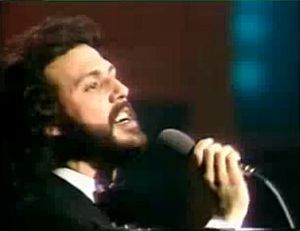
Mendes has grown a beard since
his last appearance in 1968. He's also brought a better song: a
frenetic, pacy, minor-keyed spiral, building and building to reach
wilder and wilder heights like a short-circuited Pulp number. It is,
for us, a Eurovision classic and the worthy winner of 1972. We're into
the proper good stuff now.
|
|||
|
8pts |
1980 | AV:
1st Eur: 7th |
| José Cid - "Um grande, grande amor" | |||
|
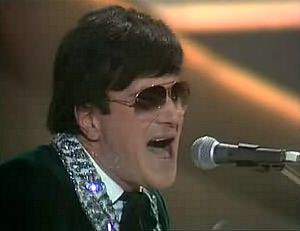
José Cid is a sort of
cross between Roy Orbison and Elton John. With a verse stolen from
"Eloise", and a fantastically joyous chorus sprinkled with a fair
amount of '70s glitz, he wins our hearts, while a very final false end
catches out the audience.
|
|||

|
10pts |
1969 | AV:
3rd Eur: 15th |
| Simone de Oliveira - "Desfolhada portuguesa" | |||
|
For 1969's contest Portugal
went back to their 1965 entrant, Simone de Oliveira, for a powerful,
passionate and at times histrionic Mediterranean-inflected slab of
patriotic chanson. The genre doesn't get much better than this.
|
|||
|
12pts |
1981 | AV:
1st Eur: 18th |
| Carlos Paião - "Playback" | |||
|
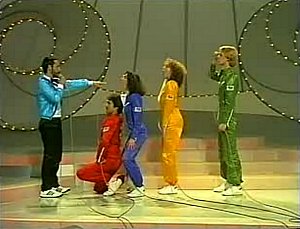
Picking up 1980's Telex where
they left off, and taking them to where they needed to go was
Portugal's 1981 entry, "Playback" by Carlos Paião. One of the
best Eurovision songs of all time, it is a wonderful blend of minimal
electronics and soaring orchestration: an angular, robotic lament for
talent in a world of quantized music. It's amazing that it's not a
German entry, with its Schools & Colleges theme tune sound.
Adorable little Carlos, a Timothy Claypole kind of chap, is accompanied
on stage by four backing vocalists cum dancers in differently coloured
flight suits (that he doesn't rip off their trousers is a trick
missed), one of whom looks a lot like Bob Carolgees. Together they
jerkily ram their microphones against their heads, bob up and down, and
sprain their necks. It's hard not to join in. Unquestionably this
should've won. Unforgivably it came joint second-to-last. Sometimes
Europe gets things very wrong indeed.
|
|||