| R.B.6 6 A V I E W 2 0 0 9 |
 |
1
IM 448199 |
| R.B.6 6 A V I E W 2 0 0 9 |
|
1
IM 448199 |
|
||||||||||||||||||||||||||||||||||||||||||||||||||||||||||||||||||||||||||||||||||||||||||||||||||||||||||||||||||||||||||||||||||||||||||||||||||||||||||||||||||||||||||||||||||||||||||||||||||||||||||||||||||||||||||||||||||||
|
2009 - APRIL TO JUNE
Here
then are the half-time scores:
Figure 2.1 - TV, Radio and Film, week
by week
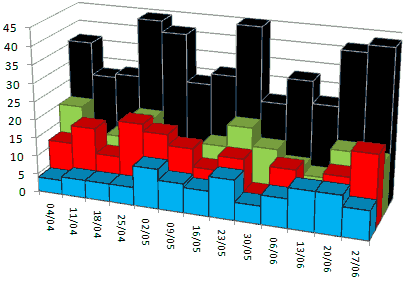 Figure 2.2 - TV, Radio and Film, day by day 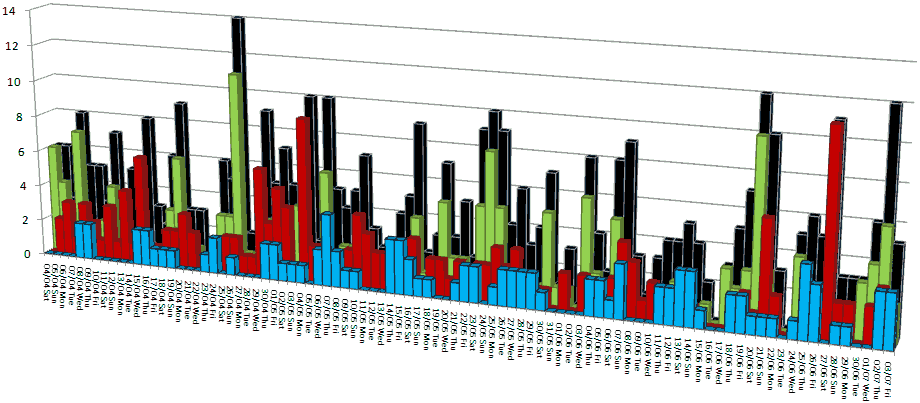 Overall TV Radio Film Radio
had a good run of things from May onwards, benefiting particularly from
the Cricket. Recent form has
been largely a result of Wimbledon
on R5 shoving me over to all that scorable programming on R4.
Television's brief spell of form at the turn of May is also partly
sport-related: in this case the Snooker.
May Day offers a particular spike, with the Snooker final joined by The Wire, Ashes to Ashes, and the Decision '79 election re-run on BBC
Parliament. Unfortunately, this spike is then followed by one of the
most depressing lulls we've ever had to put up with of a Spring. The
red in these graphs is barely peeking above the blue of the radio.
Certainly, we've been effected by the lack of Doctor Who, but we;'ve had decent
runs of Robin Hood, The Wire and Ashes to Ashes by way of some sort
of amends. So it's not that so much as a crash of everything else
televisual. This state of affairs became particularly bad in June where
if it wasn't for the likes of Springwatch
and Glastonbury, television
might well have become a useless living-room ornament. The big red
spike on the 27th is courtesy of The
Wire and Glastonbury.
Meanwhile, film has had its ups and downs, doing just enough to keep us
aware of it.
Figure 2.3 - Network by network, week
by week
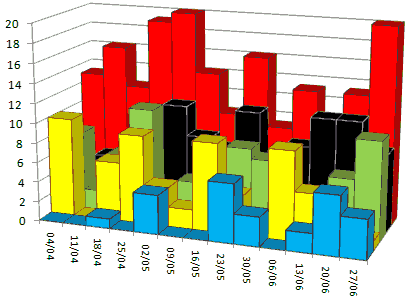 BBC TV ITV TV 4TV 5TV BBC Radio Radio
did so well this run that it has been moved back a file from last
quarter and stands rather proudly against BBC TV, even outplaying it on
the week commencing 13th June. 5TV made a definite recovery on last
quarter's form: there's actually some blue to see this time around. ITV
seems to have one good week in every three, while 4TV ticks along with
its films and occasionally gives the BBC a modest run for its money.
Figure 2.4 - Digital vs Analogue, week
by week
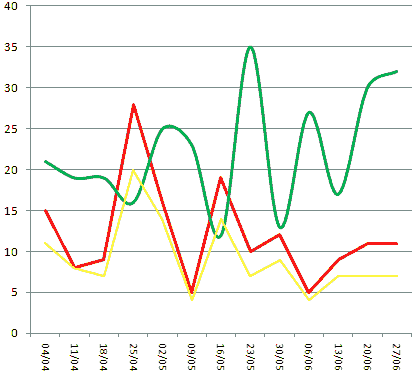 Digital
 excl. Film4
Analogue
Let us check up on the worth of the digi-box. The first thing to notice is that this time around the impact of Film4 is very small indeed. Sure, it provides a small knuckle-full of points a week, but it seems to be playing no significant part in shaping the digital graph. The digital points are by and large coming from elsewhere along the digital spectrum. We'll explore that a little further in the next graph but first let us use this one to compare the digital-only channels' performance against the analogue five. Not good for digital is it? In only two weeks of the 13 that made up this quarter did the digital channels manage to exceed the performance of the analogues: The w/c 25th April gave us Snooker on BBCi, and some archive-raiding on B4 of the likes of Cilla and Dusty, while the w/c 16th May needed the cinematic talents of Blue Velvet and All About Eve (not to mention a lull in the analogue delights) to sneak ahead. So, on current programming, digital is looking pretty rubbish. Now lets make it even more rubbish by removing all the films from the statistics: Figure 2.5 - Digital vs Analogue
(excluding film), week
by week
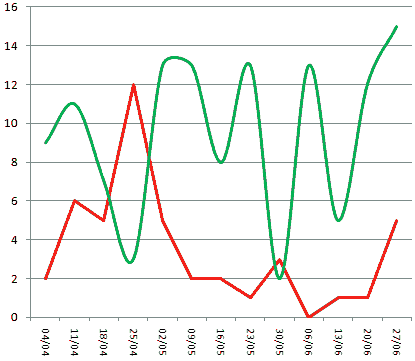 Digital Analogue The digital score falls through the floor the minute films are taken out of the equation. In one week it even fails to score any points. It should be noted that the second week of digital success is now a different week to what it was before: a different lull in analogue television made lullier by the lack of a film or three. Indeed, for both digital and analogue, the loss of the motion picture means a massive reduction in the weekly points haul, but that reduction is massively more pronounced for the digital-only channels. Let us, then, look at the real talent: Figure 2.6 - Analogue channels week by
week
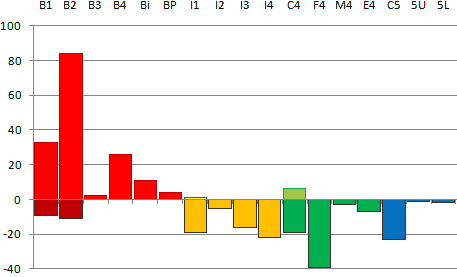
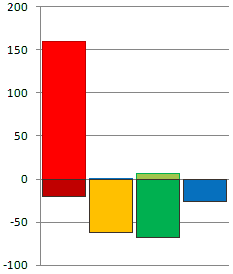
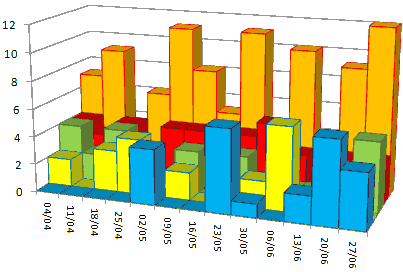 BBC1 BBC2 ITV1 Channel 4 five BBC1 moves two files back on last time, representing an improvement in form brought about by Ashes to Ashes, Robin Hood, and Formula One. By far and away the success of analogue, and this should come as no real surprise, is BBC2. Even ignoring The Wire, B2 provides us with Snooker, Springwatch, and Glastonbury, and that's just the special events. C4's performance has, until recently, largely been maintained by films. This has even more-so been the case for the ITV and C5, the latter having some particularly good films but not a lot of them. Let us take a look at the film question in yet more gory detail:
This
shows us with some clarity which television stations of the main four
networks are really delivering. Film4, not unsurprisingly, continues to
be the best bet for film output. B2 is over twice as successful
televisually as its nearest rival. Nice to see BBC Parliament
outperforming BBC3, too. But more of that later on.
Figure 2.9 - Average performance of
each weekday
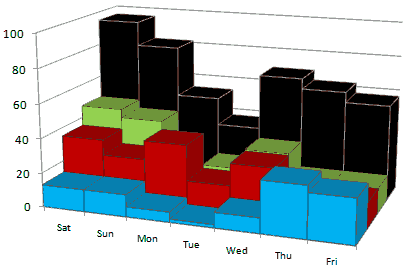 Overall TV Radio Film Here then is our average week. Tuesday is the day I'm down the pub, or so it would seem. Saturday is by far the best day, all things considered, but Monday has the best of the television, thanks to things like Stewart Lee, Ashes to Ashes and The Wire. In Our Time makes Thursdays a great day for radio, while film is strongest of a weekend. Ok. Let's take a look at the chart:
BBC 2 goes from strength to strength. That's a combination of seasonal events and the back-to-back runs of The Wire. BBC1 and C5, despite both lacking their key dramas of the season (Doctor Who and House respectively) have none-the-less finished on the same average points as last year. We've already discussed how B1 did this, and C5 made up the points with a selection of decent films (including the Dollars trilogy). C4 also maintained its seasonal average. I know it's becoming something of a habit now on my part, but take a look at the little graph up there for BBC4. Red lines show June figures, green lines show the other quarters since this project began. This is the third lowest score, ever, for BBC4, and the first Spring it's ever scored an average of less than 3pts per week. At the moment it's paying lip service to the 40th anniversary of Apollo 11 by dusting off the odd doc or two and sending James May to BBC2. But the best archive raiding on this topic has been done at the new home of the old BBC4 boss (and recent BBC2 invigorator) Roly Keating: [[The BBC Archive]], which is increasingly looking like something important. If 4 On Demand's promises of archive material come anywhere close to being true (which I can't help but doubt) then there'll even be the hint of an impetus there to expand archive provision even further. Fingers crossed. Meanwhile, BBC4 begins to look pretty pathetic. Take a look at this last week. Here are some programming decisions that are questionable: Return to... Airport (episode 5/5) should not be on BBC4, even from a Media Studies perspective. The documentary series The Pre-Raphaelites: Victorian Revolutionaries may be ok, but the words "narrated by Nigel Planer" suggest otherwise. And there is far too much repetition of recent material in the name of themed evenings. It's getting as bad as BBC3 used to be at times for multiplex scheduling. I don't mind a bit, but it's starting to look like filler. And it's filling a channel that used to offer more than that. So while it buggers about wasting its and everybody else's time, I shall go and watch something interesting at the Archive. I'll be back in a couple of weeks. See you then. Ivan.
|
||||||||||||||||||||||||||||||||||||||||||||||||||||||||||||||||||||||||||||||||||||||||||||||||||||||||||||||||||||||||||||||||||||||||||||||||||||||||||||||||||||||||||||||||||||||||||||||||||||||||||||||||||||||||||||||||||||