| Samuel Carr Skinner and his wife Florence
were the occupants of Throapham Manor at the turn of the 20th century.
Skinner was Chairman of Skinner and
Holford,
Sheffield, who owned Waleswood and Beighton collieries. In the 1920s he
sold some of his land for the Cheltenham Mining Institute, and in the
1930s he sold some more for the Dinnington Senior Schools: the land now
occupied by Lower School. He died on 20th February 1941, aged 65 years [RotherhamWeb]. The manor seems subsequently to have passed into the hands of the West Riding council, and from the turn of the 1950s it was used by both the Secondary Modern and the Secondary Tech as much-needed extra teaching space. A total of eleven classrooms were appropriated on the site. Elizabeth Pollard writes: "It was magical having this beautiful old house to study in. Mr. Burgess [seen in this staff photo] taught us music in the left hand room you can see in the photo [right]. The large tree on the right was a beautiful copper beech and in the back garden there was an ancient walnut tree. (The boys used to smear the girls with unripe nuts which left brown and indelible marks on the skin!) Mr. Lynch, the maintenance man, carefully controlled the glasshouse on the opposite side of the lane and grew grapes, peaches and many other exotics. In walking over from the main school we had to short circuit the sheep grazing in the paddocks! The adjacent farm was run by a local family I recall... Throapham really was a wonderful place and we were quite privileged to learn there. Mostly it was the arts classes, i.e. music, theology, geography, etc. that were held there, a somewhat muddy trip in winter and we had to change our shoes at the door." |
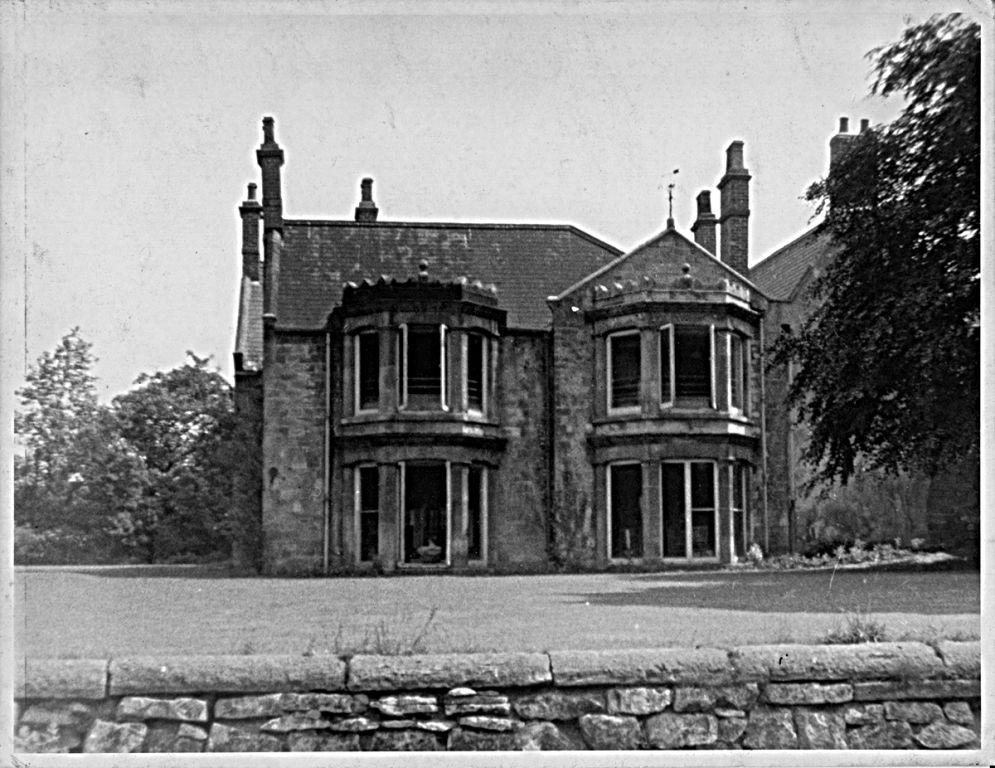 Throapham Manor from the back lawn, 1953 |
|
|
The
testimony at [J31],
suggests that "The Skinners" (named after the former occupants) was a
further building in the grounds of the manor. By
January 1965, Throapham was out of use having been replaced
by the Terrapins, but in 1966 there was discussion about buying the
Manor
because while it had never been much good for classrooms, it could be
put
to use as a Remedial retreat. It seems unlikely that this move went
ahead, as the buildings were demolished in the late 1970s. The Hunters estate was built on land to
the north of the Manor in the '80s, and extended south over the Manor
and
its pond into the '90s. "Skinners" is now used to refer to the area of woodland that is what's left of the manor's orchard. There are the remains of some of the outbuildings in the wood, including the remnants of the glass-house. There's apparently a pet cemetery around there too, but if there's anything of it to be seen, it must be well hidden. Just
before Skinners Wood is a Caretaker's
House known as "White Gates", and next-door to that is the old Library
building.
|
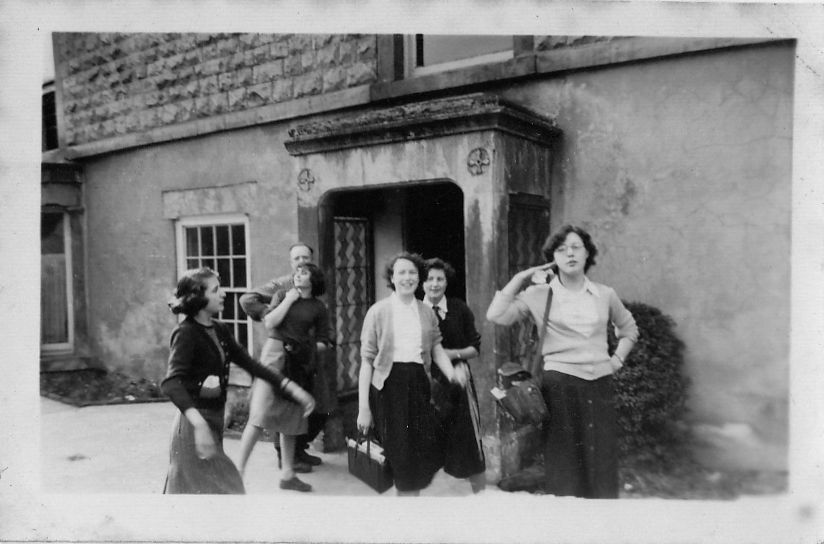 The
front door of the Manor, March 1953
|